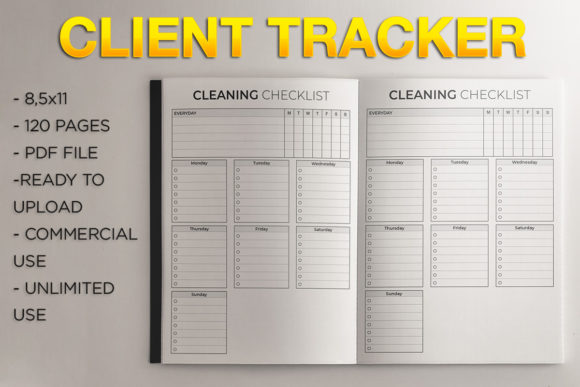
Evaluating the Client Tracker KDP Template for Professional Publishing
For self-publishers and digital product creators, the efficiency of asset creation often dictates profitability. The Client Tracker KDP Template addresses a specific operational bottleneck: the time-consuming process of formatting interior files for low-content books. This 8.5″ x 11″ no-bleed PDF template provides a pre-formatted foundation for publishing client management logs on Amazon Kindle Direct Publishing. Rather than spending hours adjusting margins, gutters, and header placements in design software, publishers can utilize this ready-made file to accelerate their workflow. Understanding the practical utility and technical specifications of this template is essential for determining whether it aligns with your current publishing strategy or business needs.
Technical Specifications and KDP Compliance
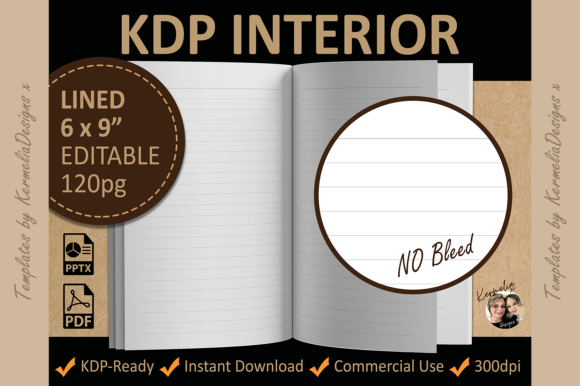
The primary value proposition of any KDP interior template lies in its adherence to Amazon’s strict printing guidelines. This specific Client Tracker KDP Template is engineered for the standard US Letter size of 8.5″ x 11″, which remains the most versatile dimension for professional logbooks and business organizers. Crucially, the file is configured as a no bleed design. In KDP terminology, "no bleed" means that all content, including text, lines, and graphics, stays within the safe margin area and does not extend to the physical edge of the paper. This distinction is vital because selecting the wrong bleed setting during upload can result in rejected files or, worse, approved books with cropped content.
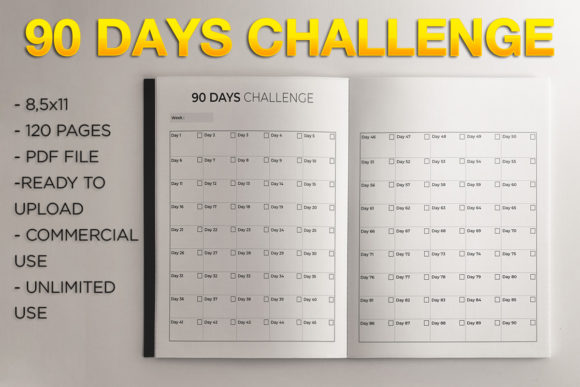
The template comprises 120 pages, a strategic length for this niche. A 120-page book offers sufficient utility for tracking multiple clients over several months without becoming prohibitively expensive to print. Thicker books increase production costs, which eats into royalties; thinner books may be perceived as lacking value. At this page count, the spine width is substantial enough to allow for legible spine text if desired, yet the overall unit cost remains competitive. The single PDF format ensures compatibility across all operating systems and eliminates font embedding issues that frequently plague Word or InDesign uploads.
Interior Layout and Functional Design
While the exterior cover attracts the initial click, the interior layout determines customer retention and review quality. A functional client tracker must balance data density with whitespace. This template typically includes structured fields relevant to service-based professionals:
- Client Identification: Dedicated spaces for names, contact information, and company details.
- Project Metrics: Columns for project status, deadlines, deliverables, and milestones.
- Financial Tracking: Areas for invoicing dates, payment status, rates, and outstanding balances.
- Communication Logs: Sections for meeting notes, follow-up actions, and correspondence history.
The "no bleed" constraint influences the aesthetic hierarchy. Without edge-to-edge graphics, the design relies on clean typography and precise line work. This minimalist approach is actually advantageous for a professional tool. Users writing in these books need high contrast and uncluttered spaces to maintain readability. Overly decorative interiors often reduce usability. When evaluating this template, verify that the gutter margin (the inner margin near the binding) is adequately sized. For a 120-page 8.5″ x 11″ book, a gutter of at least 0.375″ to 0.5″ is necessary to prevent text from disappearing into the spine crease.
Strategic Advantages for Low-Content Publishers
Time is the scarcest resource for independent publishers. Creating a compliant, aesthetically pleasing interior from scratch requires proficiency in Adobe InDesign, Affinity Publisher, or similar tools, alongside knowledge of print-on-demand specifications. The Client Tracker KDP Template compresses this learning curve and production time into an instant download. This allows creators to focus on higher-value activities such as keyword research, cover design, and marketing.
Furthermore, using a standardized template promotes consistency across a catalog. If you are building a brand around business organization or freelance resources, maintaining uniform trim sizes and interior styling helps establish brand recognition. Customers who purchase one tracker are more likely to buy complementary products if they trust the formatting quality. This template serves as a reliable baseline that can be used repeatedly or slightly modified to create variations, provided licensing terms permit such use.
Target Audience and Market Fit
This specific template configuration appeals to distinct user segments. Understanding these audiences helps in crafting effective metadata and advertising copy:
- Freelancers and Solopreneurs: Individuals managing multiple clients without expensive CRM software often prefer physical logs for quick reference and digital detoxing.
- Small Business Owners: Service providers like consultants, coaches, and tradespeople who need offline record-keeping for compliance or personal preference.
- Educators and Tutors: Professionals tracking student progress, session notes, and billing in a private practice setting.
- Creative Professionals: Photographers, designers, and writers who manage project-based workflows and need tangible tracking tools.
When listing this product, avoid generic descriptions. Instead, highlight specific use cases. Mentioning "freelance invoice tracker," "coaching session log," or "small business client organizer" connects the template to actual search intent rather than abstract categories.
Practical Considerations and Potential Limitations
While the Client Tracker KDP Template offers significant convenience, objective evaluation requires acknowledging limitations. First, as a pre-made PDF, customization options are restricted compared to source files. You cannot easily add your logo, change fonts, or adjust column widths without vector editing software. If your brand requires heavy customization, this template may serve better as a structural reference than a final product.
Second, market saturation in the low-content space is real. Simply uploading this template with a generic cover will likely yield minimal results. Success depends entirely on differentiation through cover design, niche targeting, and value-added content. Consider how you might enhance the base template. Could you bundle it with a digital version? Could you create a companion guide on client management? The template is a component, not a complete business solution.
Third, verify the licensing agreement before purchase. Some templates allow unlimited commercial use for KDP, while others restrict the number of publications or require attribution. Always read the terms to ensure compliance with both the creator’s license and Amazon’s content policies regarding duplicate content. Uploading identical interiors across multiple accounts or under different titles without meaningful variation violates KDP terms and risks account termination.
Optimizing the Upload Process
To maximize the effectiveness of this template during the KDP upload phase, follow these precise steps:
- Trim Size Selection: Confirm 8.5″ x 11″ is selected. Choosing 8.5″ x 11.69″ (A4) or other variants will cause margin errors.
- Bleed Setting: Explicitly select "No Bleed." Selecting "Bleed" will trigger an error message because the PDF dimensions do not include the extra 0.125″ bleed allowance.
- Paper Type: White paper is generally preferred for business trackers due to higher contrast and professional appearance. Cream paper, while excellent for novels, can make fine lines and small text appear muddy in functional books.
- Cover Dimensions: Calculate your cover size based on the exact page count. A 120-page white paper book has a different spine width than a 120-page cream paper book. Use KDP’s cover calculator after confirming your interior specifications to ensure perfect alignment.
Long-Term Value Assessment
The decision to use the Client Tracker KDP Template should be weighed against long-term publishing goals. For new publishers testing the business organization niche, this template reduces financial risk and technical barriers. It allows for rapid market validation without significant upfront investment in custom design. For established publishers, it streamlines production pipelines and maintains quality standards across expanding catalogs.
However, sustainable success in KDP increasingly favors unique, high-value content over commoditized templates. Use this resource as a foundation, but continuously seek ways to add proprietary value. Gather customer feedback through reviews and social media engagement to understand what features users actually need. Future iterations or complementary products should address those specific pain points. The template solves the formatting problem; your expertise must solve the user’s organizational problem.
Ultimately, this 8.5″ x 11″ no-bleed client tracker represents a practical tool in the self-publisher’s arsenal. Its worth is determined not by the file itself, but by how strategically it is deployed within a broader publishing ecosystem. When combined with thoughtful niche selection, professional cover design, and ethical marketing practices, it can serve as an efficient vehicle for delivering genuine utility to professionals seeking better client management solutions. Evaluate it against your specific workflow requirements, respect licensing boundaries, and integrate it into a publishing strategy that prioritizes user value over volume alone.