Evaluating the Homework Tracker KDP Interior for Low Content Publishing
Selecting the right interior template is often the most critical technical decision in low and no-content publishing. For creators focusing on academic organization tools, the Homework Tracker KDP Interior represents a specific niche solution designed to bridge the gap between generic planners and specialized student logs. This resource is distinct because it addresses the unique structural requirements of Amazon’s print-on-demand platform while providing functional value to end-users. When evaluating this 120-page, 8x10 no-bleed asset against broader market alternatives, publishers must consider formatting precision, user utility, and long-term portfolio viability rather than just aesthetic appeal.
Technical Specifications and Platform Compliance
The primary advantage of utilizing a pre-formatted Homework Tracker KDP Interior lies in its adherence to strict printing specifications. Amazon KDP has zero tolerance for margin errors, gutter miscalculations, or bleed violations. This specific interior is engineered with an 8x10 trim size and a no-bleed configuration, which significantly reduces the risk of rejection during the upload review process. Unlike standard 6x9 journals that dominate the low-content space, the 8x10 format offers approximately 30% more usable surface area per page. This extra space is not merely cosmetic; it is functional for students who need to write detailed assignment descriptions, track multiple subjects, or include notes alongside due dates.
The inclusion of three different PDF variants within this package addresses a common pain point for publishers: design fatigue and testing. Rather than committing to a single layout, creators can evaluate which structure resonates best with their target demographic. One variant might focus on daily granularity, another on weekly overviews, and a third on subject-specific tracking. This flexibility allows for A/B testing without the additional time investment of designing new interiors from scratch. Furthermore, having 120 pages pre-assembled ensures the book meets the minimum spine width requirements for text printing, a detail often overlooked by new publishers using thinner manuscripts.
Comparing Specialized Trackers vs. Generic Planners
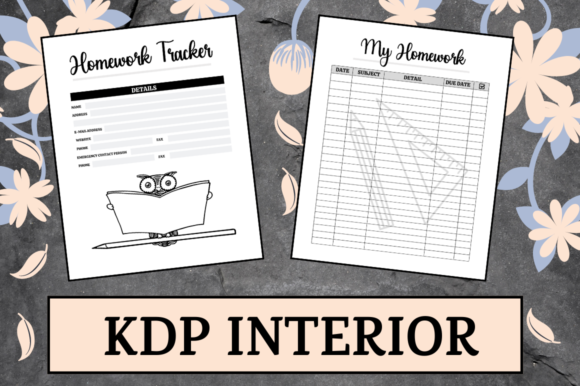
When researching inventory options, it is essential to distinguish between a dedicated homework tracker and a general-purpose planner. Generic planners typically feature undated calendar grids or lined pages that require the user to create their own tracking system. While versatile, these lack the cognitive scaffolding that students require. The Homework Tracker KDP Interior differs by providing pre-defined fields for assignment names, due dates, subject categories, and completion status. This structured approach reduces friction for the end-user, transforming the book from a passive notebook into an active executive function tool.
However, this specialization comes with tradeoffs. A generic planner has a broader potential audience and can be sold year-round. A homework tracker is inherently seasonal and demographically narrow. Publishers choosing this interior are accepting a smaller total addressable market in exchange for higher relevance and potentially better conversion rates within that niche. If your business model relies on high-volume, broad-appeal sales, a generic option may be superior. Conversely, if you are building a brand authority in the education or parenting niche, the specialized nature of this interior supports a more cohesive product ecosystem.
Digital Alternatives and Physical Utility
Publishers must also weigh physical KDP interiors against digital alternatives like printable PDFs or Notion templates. Digital products offer instant delivery and infinite scalability but suffer from screen fatigue and distraction. Parents and educators often seek physical homework trackers specifically to remove digital devices from the study environment. The Homework Tracker KDP Interior capitalizes on this preference for tactile, offline organization. While digital tools allow for automated reminders, they cannot replicate the motor memory benefits of handwriting or the visual permanence of a physical log on a desk. For publishers, this means the value proposition of the KDP version is rooted in its physicality, making paper quality and layout clarity paramount.
Evaluating Layout Variants and User Experience
The presence of three distinct layout variants requires careful evaluation regarding user experience (UX). Not all students organize information identically. Elementary students often benefit from simple, large-font checklists with ample white space, while high school or college students may require dense tabular formats that accommodate complex project timelines. When assessing this interior, examine whether the variants cover this developmental spectrum effectively.
- Visual Hierarchy: Do the headers and columns guide the eye naturally? Poorly designed trackers force users to hunt for information, leading to abandonment.
- Writing Space Adequacy: In an 8x10 no-bleed format, margins must be sufficient to prevent writing from disappearing into the gutter. Verify that the inner margin accounts for the 120-page thickness.
- Flexibility vs. Rigidity: Highly rigid structures work well for routine homework but fail for project-based learning. The best interiors balance fixed fields with open note areas.
- Aesthetic Neutrality: Academic tools should remain visually unobtrusive. Overly decorative interiors can distract from functionality and limit the age range of potential buyers.
If the provided variants lean too heavily toward one style, publishers may need to supplement the package with custom modifications. However, for those seeking a turnkey solution, the multi-variant approach mitigates the risk of launching a product that misses the mark on usability.
Strategic Fit: When This Interior Is the Right Choice
The Homework Tracker KDP Interior is optimally suited for publishers who have validated demand in the education sector but lack the graphic design resources to create compliant files from scratch. It serves as an excellent entry point for back-to-school season campaigns or as a complementary product to existing tutoring services, homeschool curricula, or parenting coaching businesses. The 8x10 size specifically targets users who prioritize workspace utility over portability; it is a desk-bound tool rather than a pocket companion.
This resource is also appropriate for publishers experimenting with "medium content" strategies. Because the interior provides structured value beyond blank lines, it supports a higher price point than standard notebooks. The 120-page count creates a perceived value of durability and longevity, suggesting the book can last an entire semester or academic year. For creators looking to move upmarket from saturated journal niches, this interior provides the necessary complexity to justify premium positioning.
Limitations and Decision Factors
Despite its strengths, this interior is not universally applicable. Publishers targeting professional adults, fitness enthusiasts, or creative writers will find the academic structure irrelevant. Additionally, the no-bleed constraint limits design possibilities; full-page illustrations or edge-to-edge graphics are impossible, which may deter creators focused on artistic expression over pure utility. There is also the consideration of evergreen viability. Homework trackers are cyclical. Publishers relying solely on this interior must plan for off-season revenue dips or maintain a diversified catalog.
Furthermore, while the files are formatted and tested, market saturation remains a factor. Simply uploading a compliant interior does not guarantee sales. Success depends on external differentiation through cover design, keyword strategy, and advertising. The interior is merely the foundation; the publisher must still build the marketing architecture. If you are unable to invest in cover customization or niche research, even a perfectly formatted interior may underperform.
Making an Informed Acquisition Decision
Ultimately, the decision to utilize this Homework Tracker KDP Interior should be based on a clear alignment between product specifications and business objectives. Evaluate your current portfolio gaps: Do you lack academic tools? Are your existing planners too generic to capture specific student needs? Do you require a no-bleed, 8x10 solution to diversify trim sizes? If the answer to these questions is affirmative, this asset offers significant efficiency advantages.
Compare the cost of acquisition against the hourly rate of hiring a designer to create three unique, KDP-compliant 120-page layouts. For most independent publishers, the time savings alone justify the investment, provided the quality meets professional standards. Scrutinize sample pages for alignment, font readability, and margin safety before purchase. Ensure the three variants offer genuine diversity rather than minor cosmetic tweaks. By approaching this interior as a strategic component of a larger publishing plan rather than a standalone lottery ticket, creators can leverage its technical readiness to build a sustainable, niche-focused product line that serves real educational needs.