125 Random Word Search Puzzles, 15x15: A Production Asset for Activity Book Publishers
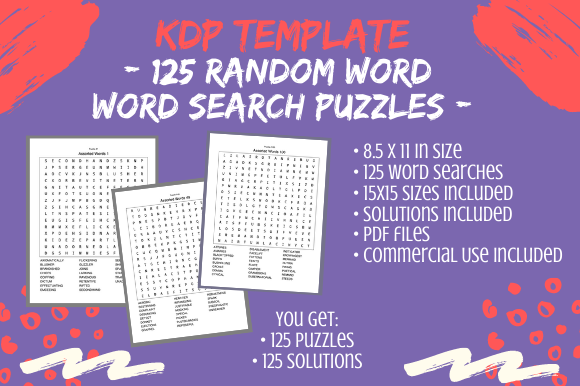
For self-publishers, educators, and content creators operating within the Amazon KDP ecosystem or digital download marketplaces, sourcing high-quality interiors is often the most significant bottleneck in the production workflow. The asset pack containing 125 Random Word Search Puzzles, 15x15 serves as a foundational production element rather than a finished consumer product. Designed specifically for 8.5×11 inch no-bleed formats, this collection provides a standardized, scalable base for activity books, cognitive therapy worksheets, and classroom supplements. Understanding how to integrate these pre-formatted puzzles into a broader publishing strategy is essential for maintaining efficiency while ensuring each final product remains unique and compliant with platform guidelines.
Strategic Role in the Publishing Workflow
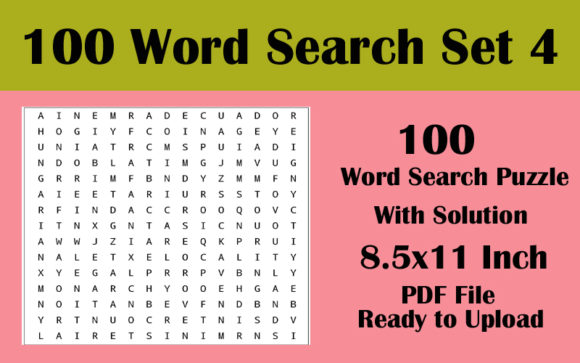
In the context of low-content and medium-content publishing, raw assets function similarly to stock photography or UI kits in graphic design. They reduce the technical friction of grid generation and solution mapping, allowing creators to focus on curation, branding, and niche targeting. The 15x15 grid size included in this set is an industry standard for adult and young adult activity books, offering a balance of difficulty and readability that fits comfortably within standard trim margins. By utilizing a pre-compiled PDF of 125 puzzles, publishers can bypass the repetitive setup phase of book creation.
This asset pack fits into three distinct phases of a project lifecycle:
- Pre-Production Planning: During the niche research phase, having immediate access to 125 generic puzzles allows for rapid prototyping. Creators can assemble test versions of books to gauge visual flow and page count before investing time in custom theming or cover design.
- Active Assembly: For mixed-media activity books, these random word searches serve as "palate cleansers" between more intensive activities like mazes, sudoku, or coloring pages. They provide necessary bulk to reach optimal page counts for spine printing (typically 100+ pages) without requiring additional creative development time.
- Post-Publication Expansion: After launching a primary title, the remaining unused puzzles from the set can be repurposed for lead magnets, email newsletter bonuses, or supplemental digital downloads, extending the ROI of the initial asset acquisition.
Technical Specifications and File Management
Efficient workflow management begins with proper file handling upon receipt of the digital product. The package includes two distinct PDF files: one containing the puzzle pages and another containing the corresponding solutions. Both are formatted at 8.5 x 11 inches with no bleed, which is the safest configuration for KDP paperback printing as it eliminates the risk of content being trimmed during the binding process.
Critical Workflow Step: Before opening the files in any editing software or online converter, create a master duplicate. Never edit the original source files. Maintaining an unaltered archive ensures you always have a clean baseline for future projects. If a customization experiment fails or a file becomes corrupted during conversion, the master copy prevents the need to re-download or reconstruct the grid data.
The inclusion of a separate solutions file is a significant usability feature. In professional activity book layout, solutions are typically grouped at the back of the book rather than placed individually after each puzzle. This separation allows for flexible pagination. You can arrange all 125 puzzles sequentially for a dedicated word search volume, or intersperse them throughout a larger compilation and aggregate the solutions in a dedicated appendix section.
Customization and Differentiation Strategies
A common challenge in using pre-made interiors is avoiding duplication issues on platforms like Amazon KDP, which prioritize unique customer experiences. While the 125 Random Word Search Puzzles, 15x15 provide the structural core, they must be transformed to create proprietary value. Treat the provided PDF as a template layer rather than final art.
Visual Layering and Branding
Use online PDF converters or desktop publishing software to overlay unique elements onto the puzzle pages. Adding custom headers, footers, and branding elements changes the metadata and visual fingerprint of the document. Simple modifications such as changing the font style of the instructions, adding decorative borders, or inserting relevant clip art can significantly alter the user experience. For example, a puzzle originally labeled "Random Words #42" can be rebranded as "Coffee Break Challenge: Edition 3" with appropriate iconography, making it distinct from other users of the same asset pack.
Content Curation and Reordering
The "random" nature of the word lists is a feature, not a limitation, but it requires editorial oversight. Review the word lists to ensure they align with your target audience's sensibilities. Even in random sets, occasional words may not fit specific niches (e.g., a children’s educational book or a corporate wellness guide). Use the editing capability to delete unsuitable pages or rearrange the sequence to create thematic clusters. Mixing these puzzles with other game types—such as trivia, journaling prompts, or logic problems—creates a hybrid product that stands apart from generic word search compilations.
Title and Metadata Modification
Never publish with the default filenames or internal titles. Renaming individual puzzle pages and updating the solution key headers is mandatory for quality control. This step also aids in internal organization if you are managing multiple book projects simultaneously. Consistent naming conventions across your modified assets prevent version control errors during the upload process.
Integration with Broader Creative Ecosystems
These puzzles do not exist in isolation; they interact with various tools and platforms in a creator’s stack. Understanding these integration points streamlines production.
- Design Software Compatibility: The PDF format is universally compatible with tools like Canva, Adobe InDesign, Affinity Publisher, and PowerPoint. When importing into these platforms, ensure the canvas size matches the 8.5×11 specification exactly to prevent scaling artifacts that can make text blurry or pixelated.
- Digital Product Marketplaces: For sellers on Etsy or Teachers Pay Teachers, the ability to edit the PDF is crucial. Buyers in these markets often expect customizable resources. You can offer the modified version as a "printable activity pack" where customers can add their own names or messages, leveraging the editable nature of the source file.
- Educational and Therapeutic Settings: Educators and therapists can use the no-bleed format to print directly on standard letter paper without adjusting printer settings. The 15x15 density is appropriate for cognitive maintenance exercises, and the random vocabulary prevents memorization, ensuring the activity remains a genuine cognitive task rather than a recall test.
Quality Control and Compliance Considerations
When incorporating third-party assets into commercial products, rigorous quality assurance is non-negotiable. Before finalizing any manuscript derived from these 125 Random Word Search Puzzles, 15x15, conduct a thorough audit.
- Verify Solution Accuracy: Spot-check at least 10% of the puzzles against the solution key. While automated generation is generally reliable, formatting shifts during PDF conversion can occasionally misalign grids. Confirming accuracy protects your brand reputation and prevents negative reviews.
- Check Margin Safety: Even though the files are no-bleed, verify that the puzzle grids maintain adequate white space from the trim edge. Binding glue can encroach up to 0.25 inches on the gutter side. Ensure the puzzles remain fully legible after physical binding.
- Review Licensing Terms: Always adhere to the specific license agreement provided with the asset pack. Understand whether the license permits unlimited commercial use, requires attribution, or restricts resale of the unmodified files. Compliance is a critical component of sustainable publishing operations.
- Test Print Validation: Digital screens can be deceptive regarding contrast and line weight. Order a proof copy or print sample pages on your intended home printer to verify that the puzzle lines are crisp and the text is readable under real-world lighting conditions.
Maximizing Long-Term Asset Utility
The true value of a 125-puzzle asset pack lies in its longevity. Rather than viewing it as material for a single book, approach it as a modular library. Segment the puzzles into smaller collections for different projects over time. Use 30 puzzles for a summer activity book, reserve 40 for a holiday-themed compilation, and keep the remainder for digital freebies to build an email list. This segmented approach maximizes the lifespan of the asset and prevents market saturation.
Furthermore, track the performance of books created with these interiors. Analyze which puzzle densities or page layouts correlate with better engagement or sales. Over time, this data informs future asset acquisitions and customization strategies. The 125 Random Word Search Puzzles, 15x15 set is not just a content filler; it is a testing ground for refining your publishing workflow and understanding your audience's preferences. By treating this resource as a dynamic component of your production system rather than a static commodity, you build a more resilient and efficient creative business.