Evaluating Large Grid Graph - Kdp Interior for Low-Content Publishing
For independent publishers and designers building a catalog on Amazon KDP, the efficiency of interior file preparation often dictates profitability. The Large Grid Graph - Kdp Interior represents a specific category of pre-formatted templates designed to streamline the creation of graph paper notebooks, technical journals, and planning tools. Unlike standard grid paper which typically features 4x4 or 5x5 squares per inch, large grid formats utilize significantly bigger cells, often measuring 5cm or 50mm per square. This distinction is not merely aesthetic; it fundamentally changes the utility of the notebook and the target demographic.
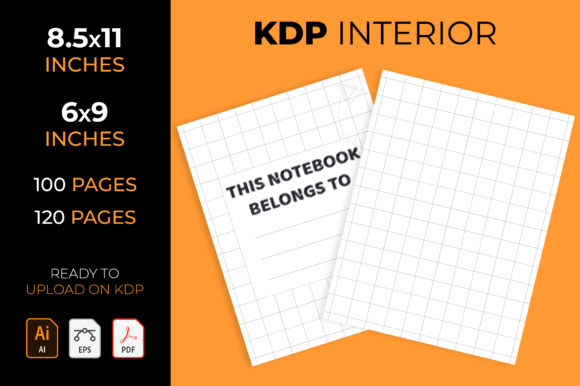
When evaluating this resource, it is essential to understand that it serves as a foundational asset rather than a finished product. The package generally includes four PDF files ready for upload, alongside editable source files in AI Illustrator CC and EPS formats. This dual-format approach addresses two distinct workflows: the rapid publisher who needs immediate, tested uploads, and the designer who requires customization to differentiate their listing in a saturated market. Understanding where this specific interior fits within your broader publishing strategy requires analyzing its technical specifications, niche applicability, and limitations compared to alternative formatting options.
Technical Specifications and Platform Compliance
The primary value proposition of any KDP interior is compliance with Amazon’s printing standards. Errors in bleed settings, margins, or resolution result in rejected uploads or poor customer reviews due to content being trimmed incorrectly. The Large Grid Graph - Kdp Interior is pre-configured with bleed settings, which is a critical feature for edge-to-edge printing. Standard graph paper often suffers from white borders when printed without proper bleed extension; having this built-in eliminates a common technical hurdle.
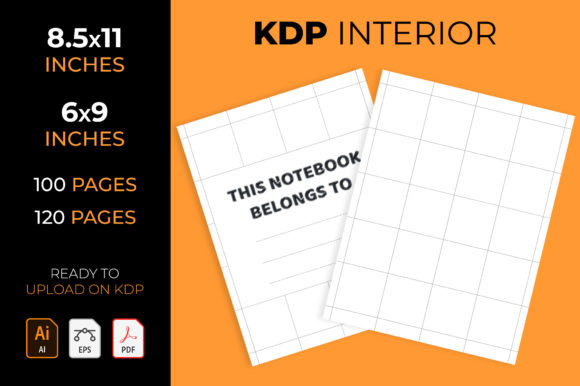
The dimensions offered—8.5×11 inches and 6×9 inches—cover the two most viable trim sizes for functional notebooks. The 8.5×11 format aligns with standard letter paper, making it suitable for academic, engineering, or professional drafting use cases. The 6×9 option caters to the portable journaling and personal planning market. With page counts of 100 and 120 pages, these interiors are optimized for paperback binding thicknesses that feel substantial without incurring excessive printing costs that erode royalties.
A significant advantage here is the "tested for upload" status. While creating a grid in software like Canva or InDesign is possible, ensuring the line weight prints clearly at 300 DPI without appearing pixelated or too faint requires testing. Pre-tested interiors reduce the research and development phase, allowing publishers to validate market demand before investing hours in custom file creation.
Niche Applicability: Where Large Grid Succeeds
Differentiation in low-content publishing relies on matching specific interior layouts to specific user problems. Large grid graph paper occupies a distinct functional niche compared to standard graph paper. Evaluating whether this interior suits your portfolio involves understanding its end-use applications:
- Early Childhood Education: 5cm/50mm squares are ideal for kindergarten and first-grade students learning to form letters and numbers. The large cells provide necessary guidance for developing fine motor skills without the visual clutter of smaller grids.
- Cross-Stitch and Knitting Patterns: Crafters frequently require large-scale grids to map out designs. A 50mm square allows for handwritten annotations and symbols that would be illegible on standard 5mm graph paper.
- Architectural Sketching and Concept Art: Professionals and students often prefer large grids for initial conceptualization. The spacious cells allow for loose gestural drawing while maintaining proportional alignment, serving as a middle ground between blank sketchbooks and restrictive technical paper.
- Accessibility Needs: Users with visual impairments or motor control difficulties often find standard graph paper unusable. Large grid formats serve as an accessibility-focused alternative, expanding your potential audience beyond typical stationery buyers.
If your publishing strategy focuses on general-purpose notebooks, college-ruled journals, or dense data logging, this interior may not be the correct fit. However, for specialized educational, crafting, or accessibility niches, the large grid format solves specific friction points that generic alternatives cannot.
Comparing Pre-Made Interiors vs. Custom Creation
Publishers must constantly weigh the tradeoff between speed and uniqueness. Creating a custom large grid interior from scratch offers total control over line color, weight, and margin ratios. However, it also introduces variables that can lead to printing errors. When comparing the Large Grid Graph - Kdp Interior against DIY creation, several factors emerge.
Time Investment: Designing a bleed-safe, double-sided grid layout with precise 50mm measurements requires proficiency in vector software. For a publisher managing multiple SKUs, the opportunity cost of designing basics is high. Using a pre-made, tested template reallocates that time toward keyword research, cover design, and marketing.
Editability and Uniqueness: A common criticism of pre-made interiors is market saturation. If ten publishers upload the exact same PDF, competition becomes purely price-based. The inclusion of AI and EPS editable files mitigates this risk. Experienced publishers use these source files to alter line colors (e.g., changing black to light blue for eye strain reduction), add branding elements, modify headers, or adjust margins to create a unique product derivative. This hybrid approach leverages the technical accuracy of the template while preserving brand distinctiveness.
Cost vs. Risk: Free alternatives exist online, but they often lack proper bleed settings or commercial licensing. Paid, professionally prepared interiors transfer the quality assurance burden from the publisher to the creator. For those new to KDP, this reduces the learning curve associated with print specifications.
Evaluating Format Versatility and Limitations
While the Large Grid Graph - Kdp Interior offers significant utility, it is important to recognize its boundaries. The 5cm square size is a fixed parameter. Publishers targeting users who need 1cm, 2cm, or imperial measurement grids will need separate assets. Attempting to scale a 50mm grid digitally to fit other measurements often results in distortion or non-standard sizing that confuses customers.
Additionally, the "double-sided" printing specification is standard for KDP paperbacks but requires careful consideration regarding paper opacity. Amazon’s standard white paper is 55# (90 GSM). Dark ink lines on both sides of the page can sometimes show through, especially with larger surface areas of ink used in bold grid lines. Publishers using this interior should order a physical proof to verify that the line weight does not cause excessive bleed-through, potentially necessitating a reduction in line opacity via the editable source files before mass publication.
The file formats provided (PDF, AI, EPS) cover most professional workflows but exclude proprietary formats like Affinity Publisher or Canva-native files. Publishers exclusively using those platforms may face conversion hurdles. While PDFs are universally uploadable, editing them outside of Adobe Illustrator requires additional software or workarounds. Assessing your current tech stack against the provided file types is a necessary step before acquisition.
Strategic Integration into a Publishing Workflow
Incorporating the Large Grid Graph - Kdp Interior effectively requires treating it as a component of a broader niche strategy rather than a standalone solution. Successful publishers typically bundle this interior with complementary assets to increase perceived value. For example, pairing a large grid interior with a cover design specifically referencing "Cross-Stitch Planning" or "Kindergarten Writing Practice" creates relevance that generic "Graph Paper Notebook" titles lack.
Furthermore, the availability of multiple trim sizes (8.5×11 and 6×9) allows for portfolio diversification within the same niche. A publisher might offer the 8.5×11 version as a primary workbook for classroom use and the 6×9 version as a portable companion for field notes or travel sketching. This maximizes the return on a single interior asset by capturing different usage contexts.
Ultimately, the decision to utilize this resource depends on your current bottleneck. If your constraint is technical formatting or production speed, the pre-tested, bleed-ready nature of this interior provides immediate relief. If your constraint is market differentiation, the editable source files offer the flexibility needed to adapt the base template. However, if your target audience requires precision measurements smaller than 50mm or specialized layouts like dot grids or isometric projections, this specific large grid format will not meet those requirements. Careful alignment between the interior’s physical properties and the validated needs of your chosen niche remains the primary determinant of success.