Large Grid Graph Journal KDP Interior Guide
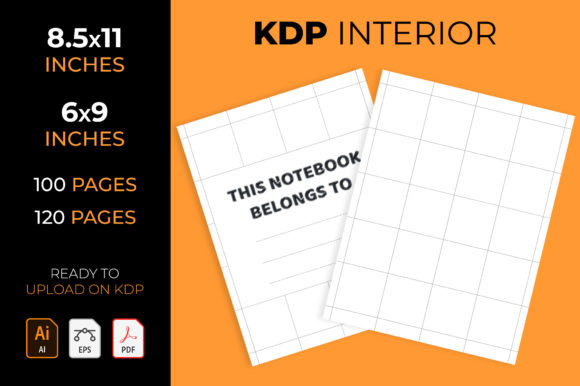
Building a sustainable publishing portfolio on Amazon requires balancing creative variety with operational efficiency. For publishers targeting technical, educational, or organizational niches, the Large Grid Graph Journal - Kdp Interior serves as a foundational asset that eliminates repetitive formatting tasks. Rather than spending hours adjusting margins and bleed settings for every new title, this pre-formatted interior allows creators to focus on niche research, cover design, and marketing strategy. The 2cm (20mm) grid size specifically addresses a gap in the market for users who require spacious planning areas rather than dense mathematical graphing, making it distinct from standard 5mm or 4mm alternatives.
Streamlining Production with Pre-Tested Formatting
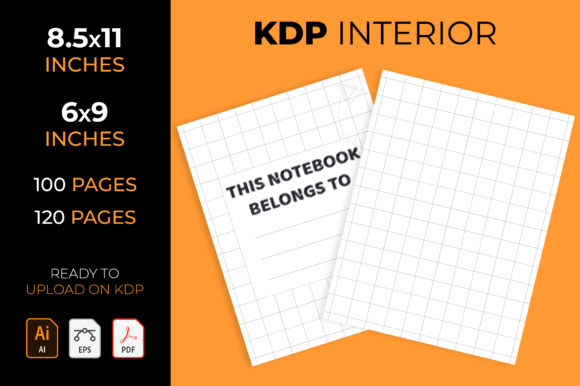
The most significant barrier to scaling a low-content publishing business is the time spent on file preparation. Technical errors regarding bleed, trim size, and safe zones are common reasons for KDP rejection or poor print quality. This interior package mitigates those risks by providing files that are already formatted and tested for upload. With dimensions available in both 8.5x11 and 6x9 inches, and page counts of 100 or 120, the templates align with standard industry expectations for trade paperbacks and workbooks.
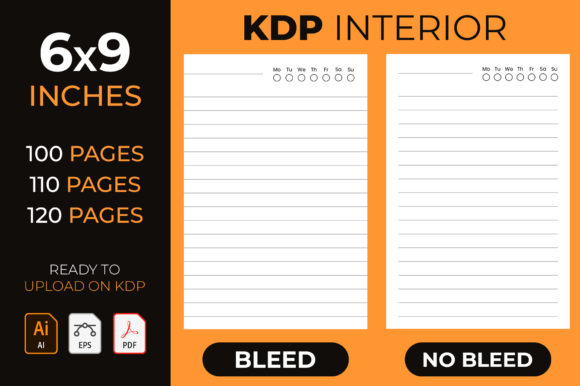
For entrepreneurs managing multiple pen names or brands, this standardization creates a reliable workflow. You can produce a consistent series of journals where the only variable is the cover art and metadata. Because the grid is ruled on both sides with correct bleed settings applied, the visual continuity remains intact even when the book is printed on varying paper stocks. This reliability builds trust with customers who expect professional-grade interiors, reducing negative reviews related to printing misalignments.
Targeting Niches That Require Spacious Layouts
Understanding why a user prefers a 20mm grid over a standard small grid is essential for effective keyword targeting and product positioning. The large grid format caters to specific demographics that find traditional graph paper too restrictive. When utilizing this interior, consider how it solves problems for these distinct groups:
- Visual Thinkers and Mind Mappers: Professionals and creatives often use large grids for brainstorming sessions where ideas need physical space to expand. The 2cm squares provide enough room for handwritten notes within each cell while maintaining structural alignment.
- Crafters and Quilters: Pattern designers and textile artists frequently require large-scale graphing to visualize blocks and colorways. A 20mm scale translates well to fabric measurements and allows for clearer annotation than fine-point grids.
- Educators and Students: In early geometry or special education contexts, larger grids reduce visual clutter and support developing fine motor skills. Teachers can use these journals for custom worksheets that accommodate larger handwriting or assistive devices.
- Bullet Journalists: While many bullet journals use dot grids, a segment of the community prefers structured boxes for habit tracking and calendar layouts. The large square size makes monthly spreads easier to read at a glance without cramping text.
By recognizing these specific use cases, publishers can move beyond generic "graph paper" keywords and target long-tail terms like "quilting design journal," "large square notebook for ADHD," or "visual planning workbook." The interior itself becomes the solution to a specific user friction point.
Leveraging Editable Source Files for Customization
While the ready-to-upload PDFs offer immediate utility, the inclusion of AI Illustrator CC and EPS editable files provides long-term strategic value. Static PDFs limit you to the exact product provided, but vector source files allow for adaptation. Publishers can modify the grid line weight, adjust opacity for a subtler aesthetic, or add branded headers and footers to create proprietary products.
This editability is particularly valuable for creating bundled offerings or differentiated variations. For example, you might create a version with a darker grid for high-contrast needs or a lighter gray grid for artists who want the lines to disappear during scanning. Having four distinct file formats ensures compatibility across different versions of Adobe Illustrator and alternative vector software, safeguarding your assets against future software updates. This flexibility transforms a single purchase into a versatile template system capable of supporting an unlimited number of niche variations.
Practical Considerations for Print Quality and User Experience
Even with perfectly formatted files, publishers must understand the physical limitations of KDP printing to set accurate customer expectations. Large grid journals interact differently with standard white paper than lined notebooks do. The 2cm grid covers significant surface area, meaning ink coverage is higher per page. While the bleed settings are correctly configured, publishers should be aware that heavy ink saturation on double-sided pages can sometimes lead to ghosting on standard 55# (90 GSM) white paper.
To mitigate this, consider advising customers in the book description about appropriate writing instruments, or design your cover and listing images to reflect the intended use case. If you choose to customize the source files, reducing the line opacity to 30-40% can maintain visibility while significantly reducing ink load and potential bleed-through. Additionally, because the grid is large, margin safety is critical. Ensure that any added content stays well within the safe zone, as the 20mm squares near the gutter can be difficult to write in if placed too close to the binding. Testing a physical proof copy before launching is always recommended to verify that the tactile experience matches the digital preview.
Integrating the Interior Into a Broader Publishing Strategy
A high-quality interior is necessary but not sufficient for sales. The Large Grid Graph Journal - Kdp Interior functions best when treated as one component of a comprehensive product ecosystem. Successful publishers often pair this interior with complementary resources to increase perceived value. For instance, a quilting journal using this grid could include a reference page for standard block sizes or a conversion chart in the front matter. A project management workbook might feature a customized index or goal-setting framework tailored to the large-grid layout.
Furthermore, consistency across a catalog reinforces brand identity. If you publish a series of educational workbooks, using the same 20mm grid interior creates a cohesive look that encourages repeat purchases. Parents and teachers are more likely to buy subsequent volumes if they know the internal format remains consistent. The availability of both 6x9 and 8.5x11 sizes allows you to serve different segments of the same audience; the smaller size appeals to commuters and students needing portability, while the larger size suits desk-based professionals and detailed craft projects.
Ultimately, the value of this resource lies in its ability to decouple production effort from output volume. By removing the technical friction of formatting and testing, it frees up mental bandwidth for the activities that actually drive growth: understanding customer needs, refining marketing messages, and identifying underserved niches. Whether you are a seasoned publisher optimizing your backlist or a new creator launching your first technical notebook, starting with a validated, professional interior establishes a baseline of quality that supports long-term business sustainability.