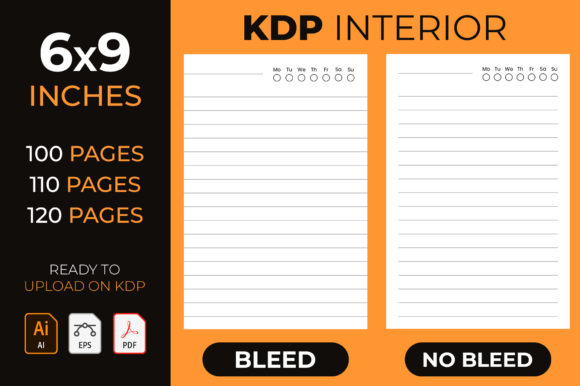
Lined Journal - Kdp Interior: Streamlining Your Low-Content Publishing Workflow
Building a sustainable Amazon KDP business often comes down to balancing quality with volume. While unique, high-content books have their place, the foundation of many successful publishing portfolios lies in reliable, evergreen low-content assets. A professional Lined Journal - Kdp Interior serves as that foundational asset, removing the technical friction from the creation process so you can focus on niche research and marketing. Rather than spending hours adjusting margins or worrying about bleed settings for every single new title, having a pre-formatted, tested interior allows you to pivot quickly between trends without sacrificing production value.
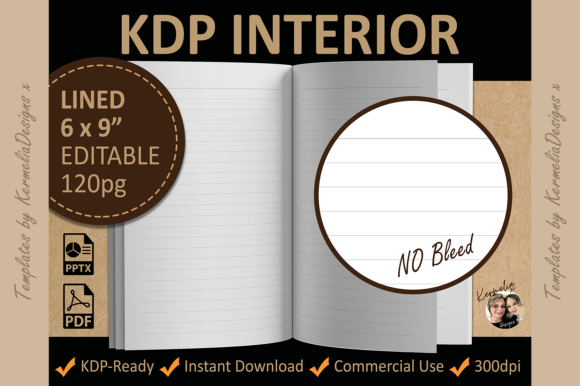
This specific interior resource is designed for publishers who understand that consistency builds trust with buyers. When a customer purchases a journal from your brand, they expect clean lines, proper spacing, and a professional layout. By utilizing a template that includes 100 formatted pages ready for upload, you ensure that every product meeting those standards automatically. The inclusion of editable source files means this isn't just a static PDF; it is a flexible design system that adapts to your evolving business needs.
Accelerating Niche Testing and Market Validation
The most immediate application for these pre-formatted interiors is rapid market testing. In the low-content space, success is rarely about guessing correctly on the first try. It is about testing multiple hypotheses efficiently. If you are exploring whether "gratitude journals for nurses" or "shift work logs for healthcare professionals" will perform better, you cannot afford to spend three days designing the interior for each test.
With six distinct PDF variations included, you can launch multiple test titles in a single afternoon. Because the dimensions are set to the industry-standard 6x9 inches and the page counts vary between 100, 110, and 120 pages, you have enough variety to test price points and perceived value without changing the core user experience. This speed is crucial when capitalizing on seasonal trends or emerging micro-niches where being first to market can determine long-term ranking potential.
Customization Without Compromise
One common hesitation with pre-made interiors is the fear of duplication. Buyers and algorithms alike prefer unique content. This is where the inclusion of AI Illustrator CC and EPS editable files becomes a strategic advantage. You aren't locked into the default layout. Instead, you can open the source files and make subtle but significant modifications that differentiate your product while retaining the structural integrity of the original design.
- Header Customization: Add niche-specific prompts or quotes to the top of every other page to transform a generic lined journal into a specialized tool.
- Branding Integration: Insert your logo or series branding in the footer area to build recognition across your catalog.
- Font Adjustments: Slightly alter line height or font weight to cater to specific demographics, such as larger spacing for seniors or tighter ruling for students.
This level of editability bridges the gap between efficiency and uniqueness. You get the technical perfection of a tested template with the creative flexibility required to stand out in search results.
Technical Reliability Across Print Options
Nothing damages a KDP business faster than printing errors. Margins that are too tight, text that gets cut off during trimming, or bleed issues that result in rejected uploads can stall momentum and frustrate customers. This Lined Journal - Kdp Interior package addresses these pain points by providing files that have already been validated for Amazon’s printing specifications.
The availability of both bleed and no-bleed settings is particularly practical. Some niches, like minimalist writing journals, benefit from the clean aesthetic of no-bleed layouts where all content sits safely within the margin. Others, such as artistic sketching journals or planners with decorative borders, require full bleed to look professional. Having both options pre-configured eliminates the guesswork. You simply select the file that matches your cover design and niche requirements, confident that the interior will print exactly as intended.
Diverse Audience Applications
The versatility of a standard lined format extends far beyond simple diary entries. Understanding how different audiences utilize these journals helps in positioning your products effectively. The 6x9 dimension is the sweet spot for portability, making it ideal for several distinct user groups:
Students and Academics: This size fits easily into backpacks and laptop bags. For this audience, the 120-page option provides substantial value for a semester's worth of notes, while the clean lines support organized note-taking systems like Cornell methods or bullet journaling.
Wellness and Mindfulness Practitioners: Therapy journals, shadow work guides, and meditation logs often rely on lined paper for free-form reflection. The 100-page count is often preferred here as it feels less daunting than a massive tome, encouraging daily use without overwhelming the user.
Professionals and Creatives: Field notes, meeting logs, and idea capture books need to be pocket-sized or purse-friendly. The 6x9 form factor strikes the perfect balance between writing space and portability. For these users, the ability to customize headers via the editable files allows you to create industry-specific tools rather than generic notebooks.
Strategic Considerations for Implementation
While these templates significantly reduce production time, they work best when paired with thoughtful strategy. Before uploading, consider how the interior complements your cover design and keyword strategy. A lined journal is a commodity; the value proposition comes from how well it solves a specific problem for a specific person.
Review the sample pages carefully to ensure the line spacing matches your target audience's expectations. Standard college ruling works for most adults, but if you are targeting children learning to write or seniors with vision impairments, you may want to use the editable files to adjust the spacing before publishing. Similarly, consider the paper color implications. While the digital files are precise, remember that KDP standard color paper has a slight cream tint, whereas black and white interiors print on white paper. Choose your file version based on the ink and paper combination that best suits your niche.
Finally, leverage the multiple file formats to future-proof your assets. Keeping the master EPS or AI files organized in your project management system ensures that if Amazon updates its trim size tolerances or if you decide to expand to other platforms like Barnes & Noble Press or Lulu, you have the source material needed to adapt quickly. The PDF files are for immediate deployment, but the editable masters are your long-term business insurance.
Maximizing Portfolio Efficiency
For publishers managing hundreds of SKUs, asset management is as important as creation. Using a standardized interior like this Lined Journal - Kdp Interior creates consistency across your backend operations. When all your 6x9 journals share the same base dimensions and margin settings, troubleshooting becomes faster, and customer service inquiries regarding formatting decrease.
This efficiency compounds over time. The hours saved on formatting and testing are reinvested into keyword research, ad optimization, and cover design—activities that directly drive sales. By treating your interiors as a solved problem rather than a recurring project, you shift your energy from production to growth. Whether you are launching your first journal or scaling an existing portfolio, having a reliable, tested, and editable foundation allows you to build with confidence and speed.