Evaluating the 90 Days Challenge KDP Template for Low-Content Publishing
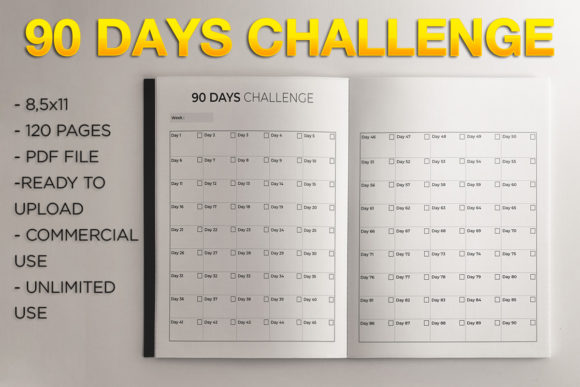
The self-publishing landscape on Amazon Kindle Direct Publishing (KDP) has evolved significantly, moving beyond simple journals to structured, goal-oriented workbooks. Among the various formats available to creators, the 90 Days Challenge KDP Template serves as a specialized foundation for producing habit trackers, fitness logs, and personal development guides. This specific template is designed with precise technical specifications: an 8.5" x 11" trim size, a no-bleed interior layout, and a total count of 120 pages. For publishers evaluating whether this pre-formatted PDF is the right asset for their next project, understanding its functional scope, technical limitations, and market positioning is essential.
Defining the Template Structure and Utility
At its core, this 90 Days Challenge KDP Template is a digital file intended to streamline the production phase of low-content publishing. Unlike a manuscript that requires extensive writing, this template provides the structural skeleton necessary for a quarterly challenge book. The 120-page count is not arbitrary; it is calculated to accommodate approximately 90 days of daily tracking entries while leaving sufficient space for introductory sections, goal-setting worksheets, monthly reviews, and final reflection pages. This page count also aligns well with KDP’s printing cost thresholds, often providing a balance between perceived value and royalty potential.
The "no bleed" designation is a critical technical characteristic. In printing terminology, bleed refers to artwork or background colors that extend to the very edge of the paper. A no-bleed design keeps all content within safe margins, ensuring that text and lines are never trimmed off during the binding process. For a challenge tracker where users must write in specific boxes or check off items, maintaining these safe zones is vital for usability. This template eliminates the guesswork involved in setting up margin guides, allowing publishers to focus on cover design and keyword research rather than interior formatting mechanics.
Strategic Advantages for Publishers
The primary benefit of utilizing a pre-made 90 Days Challenge KDP Template is the reduction of time-to-market. Creating a 120-page interior from scratch using software like Adobe InDesign or Canva requires significant hours of layout design, pagination, and quality assurance. By leveraging an instant download PDF, publishers can bypass the technical learning curve associated with book formatting. This efficiency allows for faster testing of different niches within the challenge category, such as sobriety tracking, debt payoff challenges, or mindfulness practices.
Furthermore, the standardized 8.5" x 11" size offers practical advantages for the end-user. This dimension provides ample writing space compared to smaller 6x9 journals, making it suitable for detailed daily logging. From a business perspective, this larger format often commands a higher price point than pocket-sized notebooks, potentially improving profit margins despite slightly higher printing costs. The template’s structure also encourages repeat purchases; if a customer successfully completes one 90-day cycle using a specific layout, they are likely to purchase the same format for subsequent quarters, fostering brand loyalty.
Evaluating Tradeoffs and Limitations
While the convenience of a ready-made template is appealing, publishers must weigh specific tradeoffs. The most significant consideration is differentiation. Because templates are accessible to multiple users, there is a risk of market saturation with identical interiors. Amazon’s algorithms may flag duplicate content, or customers may leave negative reviews if they recognize the interior as generic. To mitigate this, the template should be viewed as a base layer rather than a final product. Successful publishers often modify the PDF by adding unique branding, custom prompts, or niche-specific instructions to create a distinct user experience.
Another limitation involves flexibility. A fixed 120-page PDF does not allow for easy adjustment of page counts without external editing software. If a specific niche requires 100 pages or 140 pages to function optimally, this template may require cumbersome editing or may not be suitable at all. Additionally, the no-bleed constraint limits aesthetic choices. Publishers seeking full-page background images, colored borders extending to the edge, or immersive graphic designs will find this template restrictive. It is strictly utilitarian, prioritizing clean functionality over elaborate visual design.
Determining Fit: When to Use This Template
This 90 Days Challenge KDP Template is particularly well-suited for publishers who are new to KDP or those looking to validate a new niche quickly. If you are uncertain whether a "90-Day Vegan Meal Prep" journal will sell, using a low-cost or free template reduces financial risk. It is also an excellent fit for creators whose strength lies in marketing and keyword research rather than graphic design. For these individuals, the template acts as a reliable manufacturing component, freeing up mental energy for audience building and advertising.
The template also serves established publishers looking to expand their catalog seasonally. Challenge books often have cyclical demand, peaking in January or September. Having a standardized interior ready for upload allows publishers to capitalize on these trends rapidly. The 8.5" x 11" format specifically fits educational, professional, and health-related challenges where data entry and readability are paramount. If your target audience values clarity and space over artistic flair, this no-bleed layout aligns with their expectations.
When Alternatives Are Preferable
Conversely, there are scenarios where this template may not align with strategic goals. Publishers aiming to build a premium brand identity should consider investing in custom interior design. High-ticket workbooks often require proprietary layouts, unique typography, and bespoke illustrations that a generic template cannot provide. If your competitive advantage relies on superior user experience or distinctive visual aesthetics, starting from scratch or hiring a professional formatter is the more viable path.
Additionally, if you intend to publish in color or require complex graphical elements, a no-bleed black-and-white template will be insufficient. Color interiors have different printing costs and file requirements, necessitating a different technical approach. Similarly, publishers targeting international markets might prefer A4 or other regional standard sizes rather than the US-centric 8.5" x 11" format. Finally, if you plan to offer a digital companion version (such as a printable PDF sold on Etsy), ensure the licensing terms of the KDP template permit such use, as many are restricted to Amazon KDP only.
Practical Decision-Making Insights
Before integrating the 90 Days Challenge KDP Template into your publishing workflow, conduct a thorough audit of your current capabilities and objectives. Review the top ten bestsellers in your intended sub-niche. Do they utilize standard grid layouts similar to this template, or do they feature custom-designed tracking systems? If the market leaders use highly customized interiors, a basic template may struggle to compete unless paired with exceptional external marketing.
Consider the long-term viability of the asset. Will this template serve multiple projects, or is it single-use? The 8.5" x 11" no-bleed format is versatile enough to span fitness, finance, education, and wellness categories, offering good return on investment if applied across multiple niches. However, always verify the latest KDP submission guidelines before uploading. While 8.5" x 11" and no-bleed are standard settings, platform requirements can change. Ensuring your PDF meets current resolution and margin standards prevents rejection delays.
Ultimately, the decision to use this template should be driven by a balance of efficiency and quality. It is a tool for execution, not a substitute for market research or creative strategy. When used thoughtfully as part of a broader publishing plan, the 90 Days Challenge KDP Template can effectively bridge the gap between concept and live product. When used as a shortcut without consideration for differentiation, it risks becoming lost in a crowded marketplace. Evaluate your resources, define your unique value proposition, and select the formatting solution that best supports your specific publishing goals.