Evaluating the KDP Family Meal Planner for Self-Publishing
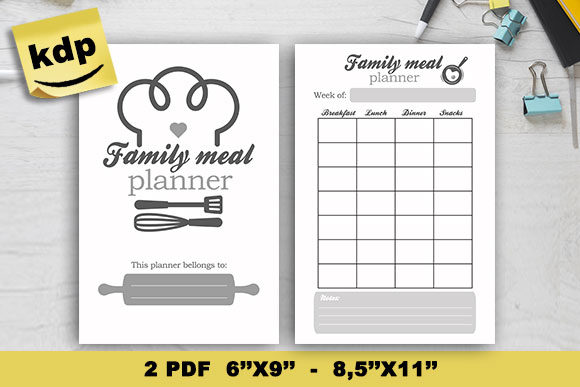
The low-content and medium-content publishing market on Amazon has matured significantly, requiring creators to move beyond generic templates toward niche-specific utility. The KDP Family Meal Planner represents a targeted asset designed specifically for self-publishers looking to enter the household organization category. This product is not a physical book but a digital production package containing two high-quality PDF files at 300dpi resolution, formatted for immediate upload to Kindle Direct Publishing (KDP). Available in both 6×9 inch and 8.5×11 inch trim sizes, with 100 pages each, this resource aims to reduce the technical barriers associated with interior design while providing a functional layout for end-users.
For publishers evaluating this asset, understanding its specific role within a broader catalog strategy is essential. It serves as a foundational interior that addresses a recurring consumer need: meal planning and grocery list management. However, like any pre-made template, it requires careful assessment regarding market saturation, customization potential, and technical compatibility before integration into a publishing workflow.
Defining the Asset and Technical Specifications
The KDP Family Meal Planner is structured as a print-ready interior file. The inclusion of 300dpi PDFs is a critical specification for evaluation. In the print-on-demand ecosystem, resolution directly correlates to print quality; anything below 300dpi risks pixelation or blurriness when rendered physically, leading to negative customer reviews and returns. By adhering to this standard, the package mitigates technical rejection risks during the KDP upload process.
The provision of two distinct trim sizes addresses different segments of the meal planner market. The 8.5×11 inch version caters to users who prefer ample writing space, desktop usage, and comprehensive weekly overviews. Conversely, the 6×9 inch version targets the portable planner demographic, appealing to customers who intend to carry the book in a bag or store it in smaller kitchen spaces. Each file contains 100 pages, which is generally considered the optimal thickness for creating a substantial spine text on KDP, enhancing shelf visibility and perceived value compared to thinner alternatives.
Strategic Fit for Publishers
This package is most relevant for publishers operating in the home organization, parenting, or health and wellness niches. Evaluators should consider this asset if their current business model relies on volume or if they lack advanced graphic design skills. Creating a professional-grade, 100-page interior from scratch requires significant time investment in software like Adobe InDesign or Affinity Publisher. For creators whose primary competency lies in keyword research, marketing, or cover design rather than layout engineering, this planner offers a practical shortcut to market entry.
Furthermore, the family-focused angle distinguishes this from generic meal planners. Layouts designed for families often include sections for school lunches, picky eater accommodations, or budget tracking, which differ structurally from solo diet trackers or fitness-focused meal prep journals. If audience research indicates demand for household-centric planning tools, this specific formatting aligns better with user intent than generalized alternatives.
Benefits and Value Propositions
The primary advantage of utilizing a pre-formatted KDP Family Meal Planner is the reduction of production time. This efficiency allows publishers to allocate more resources toward external factors that drive sales, such as competitive cover design, A+ Content creation, and advertising campaigns. In a marketplace where the cover attracts the click and the interior secures the review, having a reliable, error-free interior enables a focus on conversion optimization.
Additionally, the dual-size inclusion provides flexibility for A/B testing. Publishers can release both versions simultaneously to determine which trim size performs better within their specific sub-niche. Data gathered from these tests can inform future product development, reducing guesswork in subsequent launches. The standardized page count also simplifies pricing strategies, as printing costs for 100-page black-and-white interiors are predictable and allow for healthy royalty margins at competitive price points.
Tradeoffs and Critical Considerations
Despite the efficiencies, relying on pre-made assets introduces inherent tradeoffs that must be weighed objectively. The most significant concern is homogenization. Because this package is available to multiple buyers, there is a non-zero probability of duplicate content appearing in search results. While KDP does not penalize identical interiors outright unless they violate copyright or create a poor customer experience, customers may recognize repeated layouts across different brands. This necessitates a strong differentiation strategy elsewhere, particularly in branding and cover art.
Customization limitations also present a challenge. Unlike a bespoke interior created from source files, a flattened PDF offers limited editability. Publishers cannot easily alter fonts, adjust margin widths, or add proprietary branding elements to the interior pages without specialized PDF editing software. If a unique selling proposition depends on specific layout modifications—such as adding a branded header or changing the grid structure—this package may prove restrictive. Evaluators must decide whether the convenience of a ready-to-upload file outweighs the loss of granular creative control.
Technical Compatibility and Pre-Purchase Verification
A crucial operational consideration involves software and hardware compatibility. Prospective users must verify that their local machine and PDF handling software can properly process 300dpi files of this dimension before downloading. High-resolution PDFs require adequate RAM and processing power to render smoothly. Users working on older hardware or relying on basic web-based PDF viewers may experience lag, corruption during transfer, or inability to preview the files accurately. Ensuring technical readiness prevents workflow bottlenecks and ensures the asset can be utilized immediately upon acquisition.
Situational Analysis: When to Choose Alternatives
While the KDP Family Meal Planner serves a specific purpose, it is not universally applicable. Publishers aiming to build a premium brand with entirely unique intellectual property should view this as a mismatch. High-ticket planners often justify their price point through custom illustrations, unique methodologies, or proprietary tracking systems that pre-made templates cannot replicate. Similarly, creators targeting highly specialized dietary niches (e.g., medical nutrition therapy or specific cultural diets) may find the general family layout insufficient for their audience’s technical requirements.
Alternatives are also worth considering for publishers who already possess interior design capabilities. If a creator has established templates and efficient workflows, the marginal time savings of a pre-made file may not justify the cost or the risk of non-exclusive content. In such cases, investing in custom assets or hiring a freelance designer for exclusive rights may yield better long-term ROI and brand equity.
Making an Informed Decision
Selecting the right interior asset requires balancing speed-to-market against brand distinctiveness. The KDP Family Meal Planner functions effectively as a utility component for publishers prioritizing catalog expansion and technical reliability over bespoke design. Its 300dpi resolution and dual-format availability address common pain points in KDP production, making it a viable option for those entering the family organization niche.
However, success with this asset depends less on the file itself and more on how it is positioned. Evaluators should conduct thorough competitor analysis to ensure the market is not oversaturated with identical interiors. They should also assess their own technical environment to confirm compatibility. Ultimately, this planner is a tool rather than a solution; its value is realized only when integrated into a broader strategy that includes differentiated marketing, professional cover design, and clear audience targeting. By approaching this asset with realistic expectations regarding its capabilities and limitations, publishers can determine whether it aligns with their operational goals and quality standards.