Hand Drawn Weave Mazes: Creative KDP Assets
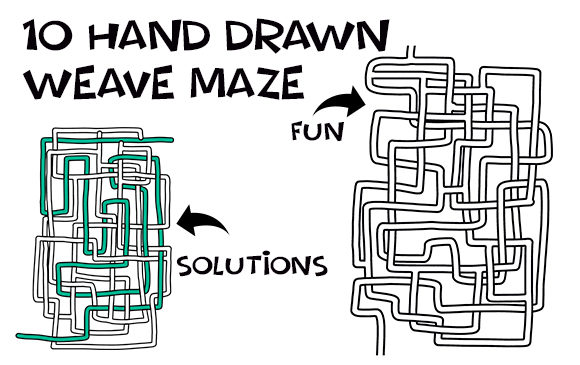
Finding high-quality, authentic puzzle content for print-on-demand projects can be a significant challenge for creators. The Hand Drawn Weave Mazes - 10-4-20 collection addresses this need by offering a set of thirteen unique, hand-illustrated puzzles designed specifically for activity books and educational materials. Unlike algorithmically generated patterns that often feel sterile or repetitive, these mazes possess the organic charm of traditional illustration. The set includes a mix of standard layouts and intricate weave designs, providing versatility for publishers and hobbyists alike. Whether you are compiling a seasonal activity book or looking for standalone brain teasers, understanding the specific characteristics of this asset pack is essential for maximizing its value in your creative workflow.
Understanding the Technical Specifications
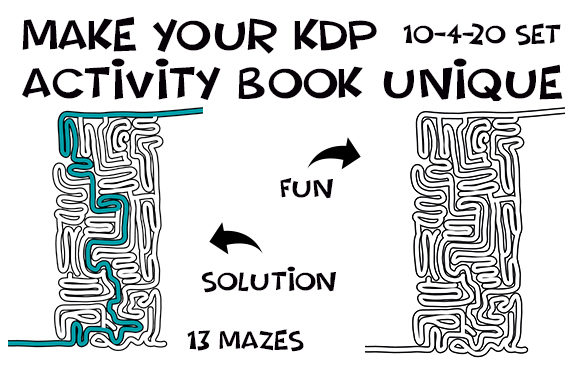
Before integrating these assets into a project, it is vital to understand what is included in the Hand Drawn Weave Mazes - 10-4-20 set. The collection comprises thirteen distinct mazes created on US Letter size paper, ensuring they fit standard publishing templates without requiring complex resizing. For maximum print clarity, blank mazes are provided in both JPG and PNG formats at 300 DPI, which is the industry standard for crisp, professional-grade printing. Solution mazes are included exclusively in PNG format to preserve transparency and line integrity.
A defining feature of this collection is the intentional absence of "Start" and "End" labels. This design choice offers significant flexibility, allowing users to customize typography and placement to match their book’s specific aesthetic. Furthermore, each maze features long tail entry and exit points. While no dedicated whitespace was left for illustrations within the maze boundaries themselves, these extended paths provide ample room for creators to insert thematic graphics, such as characters or objects, directly onto the path. This structural detail transforms a generic puzzle into a cohesive narrative element within a larger publication.
Evaluating Difficulty and Player Experience
Difficulty in maze solving is subjective, but the Hand Drawn Weave Mazes - 10-4-20 set generally targets a medium-to-hard skill level. The complexity arises from two distinct sources. First, the weave mazes introduce an over-under visual mechanic that requires players to track spatial relationships carefully. Second, even non-weave designs utilize dense curves and winding paths that can distract the eye. One specific weave maze in the set is noted for having an exceptionally long solution path, making it a suitable challenge for experienced solvers or a "boss level" puzzle at the end of a chapter.
The exception to this difficulty curve is the heart-shaped design, which offers a more accessible entry point. This variation is crucial for creators who need to balance engagement across different skill levels. Despite the varying complexity, every puzzle has been rigorously tested to ensure a single, unique solution. This reliability is non-negotiable for professional publishers; nothing frustrates a consumer faster than an ambiguous or unsolvable puzzle. By guaranteeing solvability, this set saves creators hours of verification time and protects their brand reputation.
Priorities for KDP Publishers and Entrepreneurs
For those selling low-content or medium-content books on platforms like Amazon KDP, speed and commercial viability are often top priorities. The Hand Drawn Weave Mazes - 10-4-20 set serves as a foundational asset that accelerates production timelines. Instead of spending days drawing and testing individual mazes, entrepreneurs can focus on cover design, keyword research, and marketing. The inclusion of both weave and non-weave styles allows for the creation of varied interior content, which improves customer retention and review ratings.
Commercial users should also consider the customization potential regarding seasonal trends. Because the start and end points are unlabeled and feature long tails, these mazes can be rapidly adapted for niche markets. A publisher focusing on Q4 releases can easily transform a standard maze into a holiday product with minimal graphic design effort. This adaptability extends the shelf life of the asset pack beyond a single use case, improving the return on investment for small business owners operating on tight margins.
Applications for Educators and Therapists
Educators and occupational therapists evaluate maze resources through a different lens, prioritizing cognitive development and fine motor skills over commercial appeal. The hand-drawn nature of these mazes provides a softer, less clinical aesthetic that can be more inviting for students or clients who experience anxiety with rigid, computer-generated tests. The medium-to-hard difficulty level supports executive function training, specifically targeting visual-motor integration, planning, and sustained attention.
In a therapeutic or classroom setting, the weave mazes offer specific benefits for spatial reasoning. Navigating the over-under intersections requires a higher level of cognitive processing than simple pathfinding. Educators can utilize the heart design as a warm-up activity to build confidence before introducing the more complex weave puzzles. The ability to add custom start and end imagery also allows therapists to incorporate personalized motivators or social stories, making the activity more relevant to individual learning goals.
Creative Customization Strategies
The true utility of the Hand Drawn Weave Mazes - 10-4-20 collection lies in how users leverage the customizable elements. Since the creator did not impose specific themes or fonts, the mazes act as a blank canvas for storytelling. Below are practical examples of how different audiences might adapt these assets:
- Halloween Activity Books: Place a witch illustration at the long tail start point and a broomstick at the finish. Use a spooky, hand-lettered font to label the entry and exit, instantly converting a generic puzzle into themed content.
- Winter Holiday Collections: Position a child character at the beginning and a pair of mittens or a snowflake at the end. This creates a narrative journey that appeals to younger demographics during the winter season.
- Educational Workbooks: Add mathematical problems or vocabulary words along the long tail sections. Students must solve the mini-problem to confirm they are at the correct starting point, combining logic skills with pathfinding.
- Mindfulness Journals: Pair the heart-shaped maze with affirmations or breathing exercise instructions. The organic lines complement the reflective nature of journaling, distinguishing it from high-stress academic testing.
Assessing Fit for Your Project Goals
Determining whether this specific maze set aligns with your needs requires an honest assessment of your project scope and audience expectations. If you require instant, ready-to-print pages with pre-labeled directions and fixed themes, this set may require more modification than you prefer. However, if you value authenticity, commercial flexibility, and the ability to create a proprietary look, the lack of pre-set labels is a significant advantage rather than a limitation.
Beginners should note that while the files are high-resolution, successful integration still requires basic layout skills. You will need to comfortably handle image placement and text formatting in your publishing software. Experienced designers and marketers will likely appreciate the clean line work and consistent styling, which makes batching and series creation efficient. Ultimately, the Hand Drawn Weave Mazes - 10-4-20 set is best suited for creators who view mazes not just as filler content, but as customizable components of a larger, cohesive user experience. By matching the asset's strengths to your specific production capabilities and audience needs, you can create activity books that stand out in a saturated marketplace.