Hand Drawn Weave Mazes - 9-21-20: A Practical Guide for KDP Creators
Creating a successful low-content book on Amazon KDP requires more than just uploading files; it demands an understanding of print quality, user experience, and niche specificity. The Hand Drawn Weave Mazes - 9-21-20 collection offers a distinct aesthetic that separates generic puzzle books from premium activity books. Unlike digitally generated vector mazes that can feel sterile or repetitive, these ten hand-drawn designs provide an organic texture that appeals to solvers looking for a tactile, artistic experience. However, simply possessing the files does not guarantee a high-quality publication. Many creators overlook critical technical specifications and usability factors when integrating these specific assets into their projects.
This guide addresses the practical realities of using this specific set, focusing on avoiding common production errors and maximizing the value of the hand-drawn weave style for your target audience.
Understanding the Asset Specifications
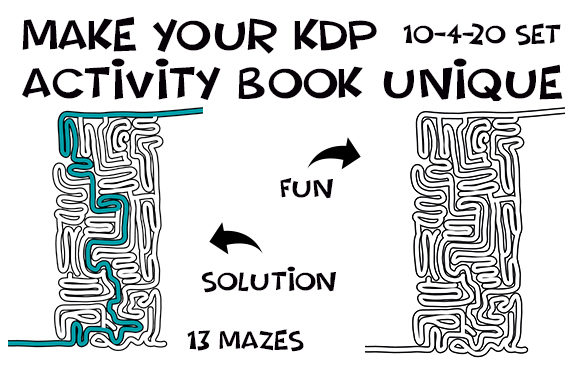
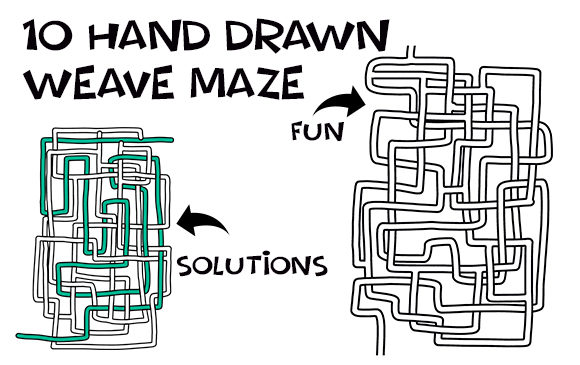
Before opening your layout software, you must understand exactly what is included in the Hand Drawn Weave Mazes - 9-21-20 package. Misunderstanding the file structure is the first point of failure for many self-publishers. This set contains ten unique mazes created specifically on US Letter size paper. It includes both blank mazes for the activity pages and solution mazes for the answer key section.
A crucial detail often missed during the initial review is the mixed file format. While the blank mazes are consistently provided in high-resolution JPG and PNG formats at 300 DPI, the solution mazes vary between JPG and PNG. This inconsistency is not a defect, but it does require attention during the assembly phase. If you attempt to batch-import solutions assuming a uniform file extension, you will encounter missing links or broken images in your manuscript. Always organize your assets into clearly labeled folders separating blanks from solutions before beginning your interior layout.
The Resolution Trap: Verifying True Print Quality
The product description states 300 DPI, which is the industry standard for crisp printing. However, a common mistake among beginners is trusting metadata without visual verification. Hand-drawn elements rely heavily on line weight and texture. If a file has been upscaled from a lower resolution source, those organic lines will appear pixelated or blurry when printed on physical paper, even if the file properties claim 300 DPI.
To avoid this quality control failure, perform a 100% zoom test on every single maze before finalizing your PDF. Look specifically at the intersections where the weave lines cross. In a true 300 DPI hand-drawn image, these crossings should be sharp and distinct. If they appear soft or jagged, the effective resolution may be insufficient for professional publishing. Since this set was created on US Letter paper, ensure you are not stretching the image beyond its native dimensions. Scaling up a US Letter asset to fit a larger trim size will degrade quality immediately. Stick to US Letter or smaller trim sizes like 8.5 x 11 or 8 x 10 to maintain the integrity of the artwork.
Navigating Mixed File Formats in Layout
The variation in solution maze formats (some JPG, some PNG) presents a workflow challenge that affects efficiency. PNG files typically support transparency and lossless compression, making them ideal for overlaying on colored backgrounds or ensuring clean edges. JPGs are compressed and may introduce artifacts around high-contrast lines.
When building your answer key section, do not treat all solution files identically. Check each solution individually against your background color. If you are using a cream or off-white paper stock simulation in your digital proof, ensure the white background of any JPG solutions blends seamlessly. A stark white box around a solution maze on a cream page looks unprofessional. For PNG solutions, verify that the transparency channel is intact. Taking five extra minutes to standardize these files or adjust their placement prevents costly reprinting errors later.
Respecting the Hand-Drawn Aesthetic
One of the most significant misunderstandings regarding the Hand Drawn Weave Mazes - 9-21-20 set is treating it like standard geometric puzzles. These mazes have imperfections by design. A frequent error occurs when creators apply aggressive digital filters, sharpening, or contrast adjustments in an attempt to "clean up" the scan.
Do not over-process hand-drawn art. Applying heavy sharpening to organic pencil or ink lines creates artificial halos and destroys the natural grain that gives the maze its character. Readers seeking hand-drawn content want authenticity, not a sanitized digital imitation. If you must adjust levels, do so globally and subtly. Trust the original 300 DPI capture. Over-editing signals to the buyer that the product is low-quality or artificially enhanced, which can lead to negative reviews citing misleading descriptions.
Usability Testing Before Publishing
Weave mazes differ structurally from standard path mazes. They involve tracking strands over and under one another, requiring higher cognitive load and visual acuity. A practical oversight is failing to test the difficulty curve with real users. Just because a maze is solvable on a backlit monitor does not mean it is enjoyable in print.
Print a physical test copy on standard home printer paper. Have someone from your target demographic (adults aged 20–50) solve it with a pencil. Watch for frustration points. Are the weave crossings too dense? Is the line weight too faint for comfortable tracking? Hand-drawn lines can sometimes vary in opacity. If testers struggle to distinguish overlapping paths, consider adjusting the contrast slightly or adding a note in the book’s introduction explaining the solving technique. Providing clear instructions is especially important for weave mazes, as many casual puzzlers may be unfamiliar with the mechanic. Enhancing usability increases customer satisfaction and reduces returns.
Strategic Placement and Book Structure
With only ten mazes in this specific set, volume is limited. A common strategic error is padding the book with unrelated filler content to reach a minimum page count, which dilutes the niche focus. Instead, leverage the scarcity of these unique assets.
Consider positioning the Hand Drawn Weave Mazes - 9-21-20 collection as a premium feature within a larger themed activity book, or combine it with other compatible hand-drawn sets to create a cohesive anthology. Alternatively, use these ten mazes as a standalone "micro-niche" sampler. When marketing, be transparent about the quantity. Clearly state "10 Unique Hand-Drawn Weave Puzzles" rather than implying hundreds of pages. Honest presentation builds trust with buyers who appreciate quality over quantity. Additionally, place the solution pages strategically—either at the back of the book or on separate tear-out sheets if binding allows—to prevent accidental spoilers while maintaining easy access.
Final Pre-Publication Checklist
Before hitting publish, run through this corrective checklist to ensure your implementation of these mazes meets professional standards:
- Verify Dimensions: Confirm all mazes fit within the safe zone margins for your chosen trim size without cropping essential artwork.
- Audit Solutions: Ensure every blank maze has a corresponding, correctly oriented solution, accounting for mixed file types.
- Check Line Clarity: Review printed proofs for line weight consistency and intersection clarity.
- Validate Metadata: Ensure your KDP listing accurately reflects the hand-drawn nature and specific puzzle type to attract the right audience.
- Test Solve: Confirm that the physical print version is legible and enjoyable under normal lighting conditions.
By approaching the Hand Drawn Weave Mazes - 9-21-20 set with technical diligence and respect for the medium, you transform simple image files into a polished, marketable product. Success in KDP comes from bridging the gap between creative assets and reader expectations through careful execution and quality awareness.